🧈 Puff Pastry with Butter – Flaky, Layered Perfection
🥐 Introduction
Puff pastry is one of the most elegant and versatile doughs in baking. Known for its delicate, flaky layers and rich buttery flavor, it’s used in both sweet and savory dishes—from croissants to pies and appetizers. Making puff pastry from scratch may seem advanced, but with patience and the right technique, you can achieve bakery-quality results at home.
🍽️ Nutritional Information (Per 100g approx.)
Calories: 540–580 kcal
Carbohydrates: 45g
Protein: 6g
Fat: 38–40g
Saturated Fat: 24g
Sodium: 350mg
Fiber: 1–2g
🛒 Ingredients
Dough (Detrempe)
2 ½ cups all-purpose flour
1 teaspoon salt
1 cup cold water
1 tablespoon melted butter
Butter Block (Beurrage)
250g unsalted butter (cold but pliable)
👨🍳 Instructions
1. Prepare the Dough
In a bowl, mix flour and salt. Add water and melted butter, then mix until a soft dough forms. Knead lightly until smooth. Wrap and refrigerate for 30 minutes.
2. Prepare the Butter Block
Place butter between parchment paper and flatten into a square (about 15×15 cm). Chill until firm but still flexible.
3. Enclose the Butter
Roll the dough into a larger square. Place the butter in the center and fold the dough over it like an envelope, sealing the edges.
4. First Roll & Fold (Turn 1)
Roll the dough into a long rectangle, then fold into thirds (like a letter). Chill for 30 minutes.
5. Repeat Turns
Repeat the rolling and folding process 5–6 times, chilling between each turn. This creates the signature layers.
6. Final Roll
After the last fold, chill the dough for at least 1 hour before using.
7. Bake
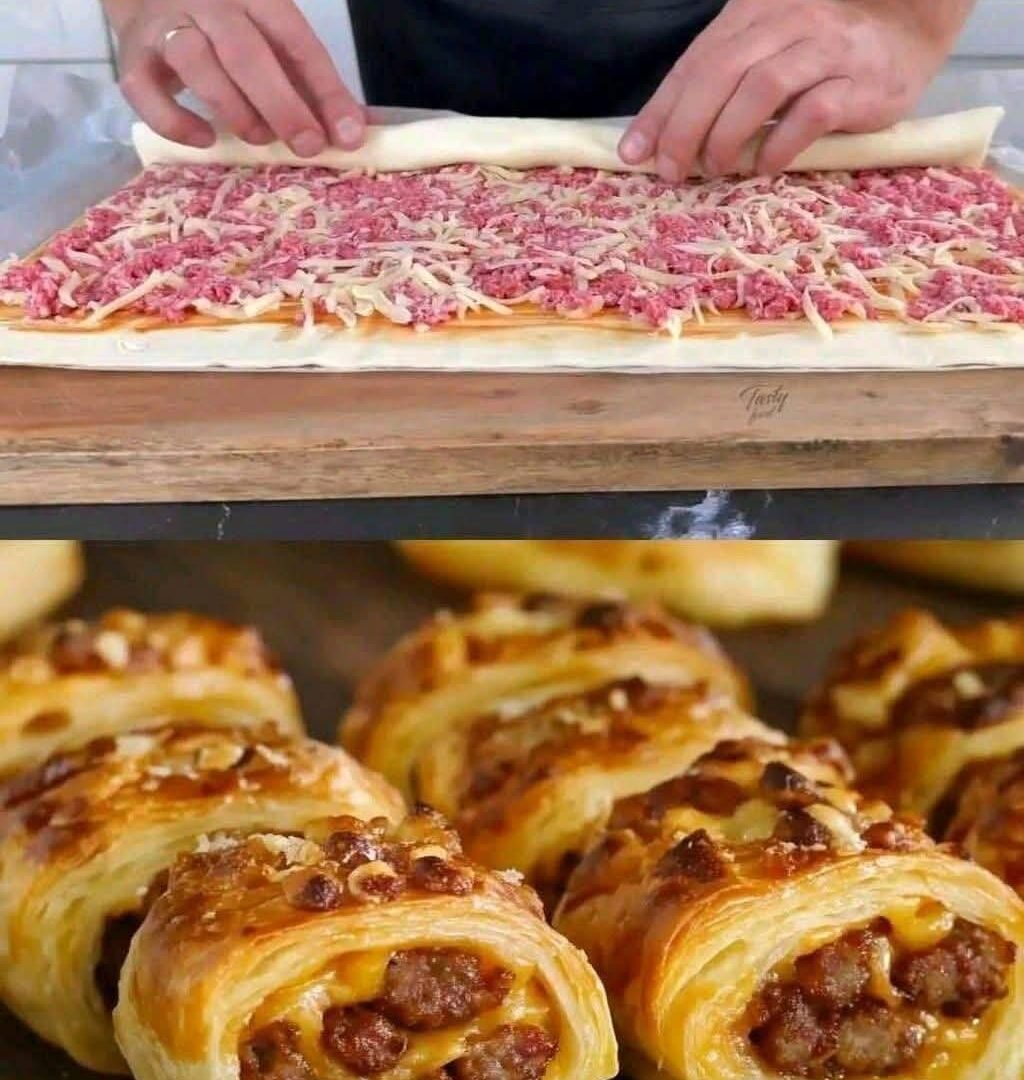
Roll out, shape as desired, and bake at 200°C (400°F) until golden and puffed (usually 15–25 minutes depending on size).
🔥 Methods & Techniques
✔️ Classic Laminating Method
Alternating layers of dough and butter create hundreds of thin layers.
✔️ Quick Puff Pastry (Rough Puff)
Butter is mixed roughly into flour, then folded—faster but slightly less refined.
✔️ Inverse Puff Pastry
Butter surrounds the dough, giving an even flakier and more delicate result.
📜 History
Puff pastry has roots in classical French cuisine, especially refined during the 17th century in France. It is often associated with the famous pastry chef Claude Lorrain, who is said to have accidentally invented it while trying to improve bread dough. Over time, it became a staple in European baking and spread worldwide.
🧱 Formation & Texture
Structure: Hundreds of thin, visible layers
Texture: Crisp, airy, and flaky
Rise: Steam from butter creates the lift
Color: Golden brown with a shiny finish
❤️ Lovers of Puff Pastry
Puff pastry is adored by:
Professional chefs and bakers
Dessert lovers (for pastries like mille-feuille)
Savory snack enthusiasts
Food creatives experimenting with elegant dishes
💡 Tips for Success
Keep everything cold—this is critical
Don’t rush the chilling process
Use high-quality butter for best flavor
Avoid pressing edges too hard to allow proper rise
Bake in a hot oven to create steam quickly
🧾 Conclusion
Butter puff pastry is a true masterpiece of baking. While it requires time and care, the reward is an incredibly flaky, rich, and versatile dough that elevates any dish. Whether you use it for sweet desserts or savory creations, mastering puff pastry opens the door to a world of culinary possibilities.