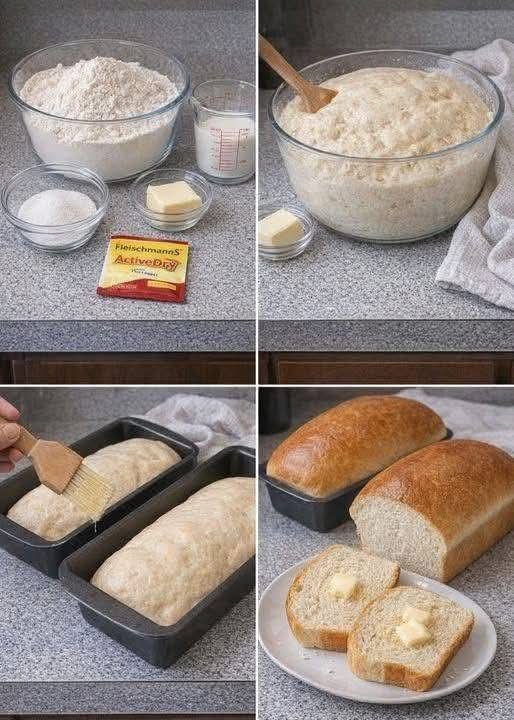
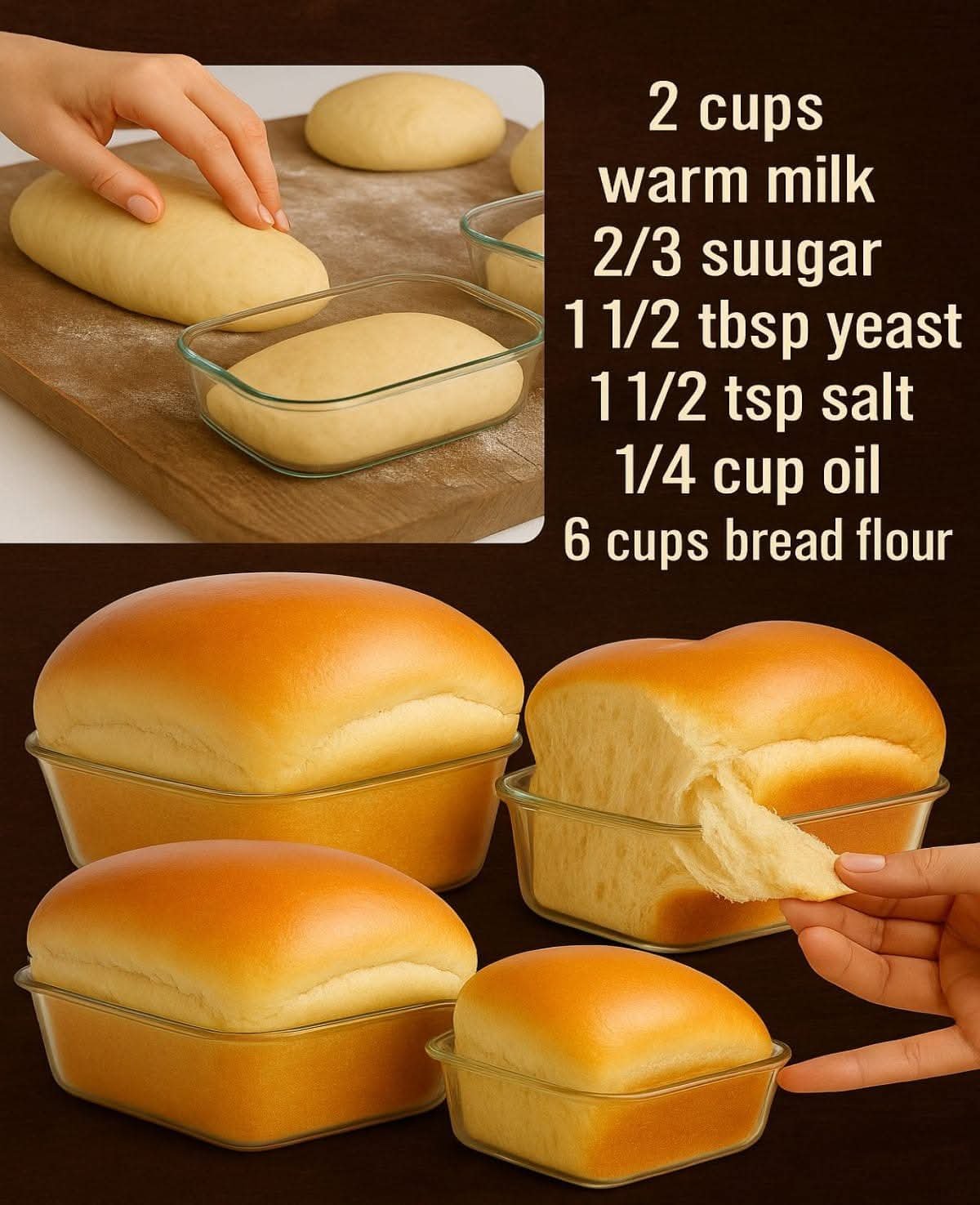
Classic homemade bread is one of the most comforting and traditional foods in the world. The smell of freshly baked bread filling the kitchen has been loved by families for centuries. Simple ingredients such as flour, water, yeast, and salt transform into a soft loaf with a golden crust and fluffy interior. Baking bread at home is not only economical but also deeply satisfying, allowing you to control the ingredients and enjoy fresh, preservative-free bread.
🍽️ Free Weekly
Recipes
Get Authentic Hungarian Recipes Every
Week
Join thousands of home cooks. Traditional recipes delivered to
your inbox — free, every week.
No spam. Unsubscribe anytime.
Homemade bread is versatile—it can be used for sandwiches, toast, soups, or simply enjoyed warm with butter.
🥗 Nutritional Information (Approximate per slice)
Calories: 120 kcal
Carbohydrates: 22 g
Protein: 4 g
Fat: 1.5 g
Fiber: 1 g
Sodium: 150 mg
(Values may vary depending on ingredients and slice size.)
🛒 Ingredients
4 cups all-purpose flour
2¼ teaspoons active dry yeast (1 packet)
1½ cups warm water (about 40–45°C / 105–110°F)
2 tablespoons sugar or honey
1½ teaspoons salt
2 tablespoons olive oil or melted butter
Extra flour for kneading
🍽️ Instructions
1. Activate the Yeast
In a large bowl, combine warm water, sugar, and yeast.
Let it sit for 5–10 minutes until foamy.
2. Mix the Dough
Add salt and olive oil.
Gradually mix in flour, one cup at a time.
Stir until a soft dough forms.
3. Knead the Dough
Place dough on a lightly floured surface.
Knead for 8–10 minutes until smooth and elastic.
4. First Rise
Place the dough in a lightly oiled bowl.
Cover with a towel or plastic wrap.
Let rise in a warm place for 1–1½ hours until doubled in size.
5. Shape the Bread
Punch down the dough to remove air.
Shape into a loaf or round ball.
Place into a greased loaf pan or baking tray.
6. Second Rise
Let the dough rise again for 30–40 minutes.
7. Bake
Preheat oven to 190°C (375°F).
Bake for 25–30 minutes until golden brown.
Tap the bottom—if it sounds hollow, it is ready.
8. Cool
Let the bread cool on a rack before slicing.
🍞 Bread-Making Methods
1. Traditional Kneading Method
This method involves kneading by hand to develop gluten, giving bread its structure and chewiness.
2. No-Knead Method
A wetter dough ferments slowly for 12–18 hours and develops gluten naturally.
3. Stand Mixer Method
Using a dough hook in a stand mixer saves time and effort while producing consistent dough.
📜 History of Homemade Bread
Bread is one of the oldest prepared foods in human history. Archaeological evidence shows that early forms of bread existed over 14,000 years ago in the Middle East. Ancient Egyptians were among the first to discover fermentation with yeast, creating lighter and softer bread.
Bread became a staple food across Europe, Asia, and Africa. Over centuries, each culture developed its own variations—from French baguettes to Moroccan khobz and Italian ciabatta.
🧑🍳 Formation (How Bread Dough Works)
Bread forms through a simple but fascinating process:
Hydration – Water combines with flour proteins.
Gluten Development – Kneading creates gluten networks.
Fermentation – Yeast feeds on sugars and releases carbon dioxide.
Rising – Gas bubbles expand, making dough fluffy.
Baking – Heat sets the structure and forms the crust.
❤️ Bread Lovers
People who love homemade bread often enjoy it in many ways:
Warm slices with butter and honey
Toast with jam or peanut butter
Sandwiches with meat, cheese, or vegetables
Served alongside soups and stews
Dipped in olive oil and herbs
👨🍳 Methods Bread Lovers Use
Bread enthusiasts often experiment with:
Using whole wheat or rye flour for healthier bread
Adding seeds like sesame, sunflower, or flax
Long fermentation for better flavor
Baking in a Dutch oven for a crispy crust
✅ Conclusion
Classic homemade bread is simple, delicious, and rewarding to make. With just a few ingredients and patience, you can create a warm, aromatic loaf that brings comfort to any meal. Whether enjoyed fresh out of the oven or toasted the next morning, homemade bread remains a timeless favorite loved around the world.
To provide the best experiences, we use technologies like cookies to store and/or access device information. Consenting to these technologies will allow us to process data such as browsing behavior or unique IDs on this site. Not consenting or withdrawing consent, may adversely affect certain features and functions.
Functional
Always active
The technical storage or access is strictly necessary for the legitimate purpose of enabling the use of a specific service explicitly requested by the subscriber or user, or for the sole purpose of carrying out the transmission of a communication over an electronic communications network.
Preferences
The technical storage or access is necessary for the legitimate purpose of storing preferences that are not requested by the subscriber or user.
Statistics
The technical storage or access that is used exclusively for statistical purposes.The technical storage or access that is used exclusively for anonymous statistical purposes. Without a subpoena, voluntary compliance on the part of your Internet Service Provider, or additional records from a third party, information stored or retrieved for this purpose alone cannot usually be used to identify you.
Marketing
The technical storage or access is required to create user profiles to send advertising, or to track the user on a website or across several websites for similar marketing purposes.